
Form Abandonments Are As High As Ever. Here’s How To Avoid Them.
Immediate service is the name of the game. Customers will, more often than not, gravitate to the company – or, in this case, the financial institution – that can get them where they need to go fastest. But while retail can be entirely self-serviced, banking usually requires additional help. A customer needs a loan officer to get their home loan approved. A member needs a teller to explain the differences between checking accounts.
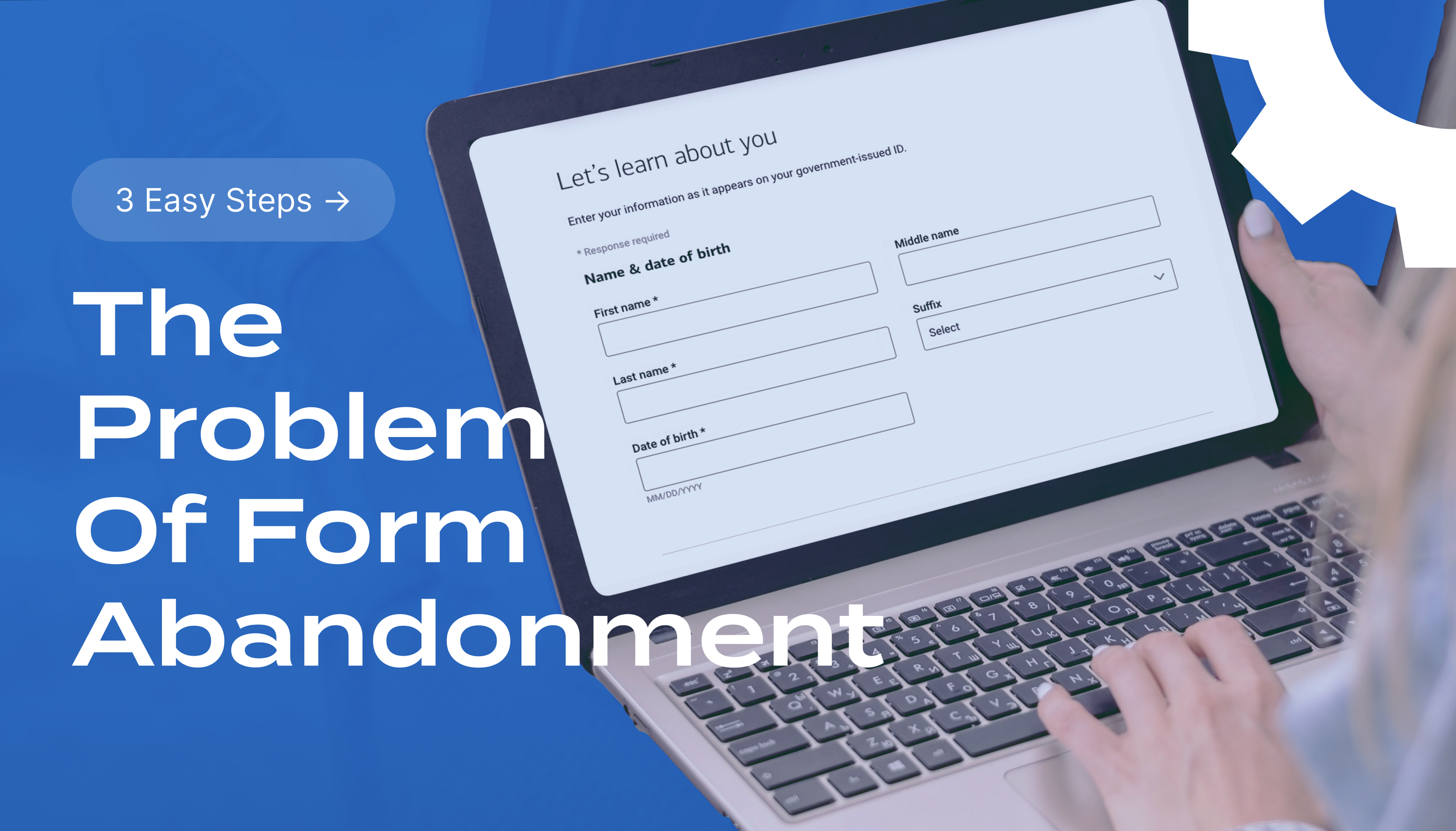
High abandonment rates on forms and applications lead us to believe that users aren’t getting the support they need to finish such tasks. For every new checking account opened online, 3.36 potential accounts are abandoned. That means that roughly 77% of people who wanted to open an account didn’t get to the finish line. Let’s look at why.
When Applications Go Wrong
Financial institutions that have fewer accounts opened digitally also see fewer form abandonments. The reason is self-explanatory. If your customers are less likely to find you online, they are also less likely to abandon online forms and applications. In this scenario, fewer warm leads are attempting to open accounts online, and a lead who walks into a branch and speaks to a teller about opening a new account is far less likely to walk out of that branch without a new account.
But as community banks and credit unions know by now, most warm leads want to do their banking online, at least in some capacity. Higher application abandonment rates at more digitally minded financial institutions show us that financial institutions are promising the same sort of digital experience bigger fintechs offer but not delivering on that experience. They offer online account opening, but the forms are clunky and complicated. Next steps are cloudy and confusing. Forms that take more than 3–5 minutes to complete see abandonment rates of almost 50%. These are dramatic application abandonment rates that most community banks and credit unions have simply not addressed.
Where Applications Can Be Fixed
Here’s the big question: How do community banks and credit unions provide the sort of digital experience customers and members want without the big budgets of bigger banks? What if your financial institution isn’t ready to dive headfirst into the pool of AI-powered account opening but needs to make the digital experience more palatable? There is a middle ground. Here are three practical steps to improve your application process.
1. Shorten Your Applications
Focus on the bare essentials and don’t require new customers or members to complete more steps than necessary. According to one global poll, more than half of customers who are presented with more than 10 questions in a form will abandon the application. There is information financial institutions need to open an account that goes beyond basic contact information. However, not all of that has to be done on the front end. That leads to the next step. What happens when the form is submitted?
2. Create Concrete Next Steps
The application form is just the first step. The data from this post is focused entirely on folks who abandon the process before they even get to account funding or verification. A shortened application form is only effective if it leads to clear and quick next steps. Digital tools like video banking can allow customers or members to fund their account right then and there rather than waiting on an approval email.
3. Utilize Digital Tools to Create a Better Experience
Opening new accounts isn’t easy. There’s a lot of information needed, so in many ways, financial institutions are stuck between a rock and a hard place. How is it possible to get online applications submitted if over 50% of users will abandon a form after 10 questions? Most applications can’t be fewer than 10 questions. These are real challenges, and better digital tools can solve them while better serving potential customers in the moment. A chatbot is helpful for basic questions, but tools like video banking or co-browsing take it a step further.
Video Banking
With video, potential customers can speak to a banker from anywhere, just like they could in a branch. They can ask questions and be guided through the process, including account funding and verification. Customers can sign documents, submit their identification, and open their account from that call without a follow-up appointment.
Co-Browsing
Co-browsing is a proven sales tool that allows a customer or member to share their browser session with an employee while filling out an application with the customer’s permission. If they are confused, the employee can guide them through the application process and even control their screen if necessary.
Meeting Applicants Where They Are
Applicants are opening accounts and filling out applications online more than ever, and they expect support. They want the speed of a digital application with the expertise they’d get across the desk at a branch. When an online form can’t give them both, they leave before they finish.
Closing that gap doesn’t take a massive budget or an AI overhaul. Better forms, clear next steps, and an enhanced digital experience can turn abandoned applications into completed applications. Video banking and co-browsing put a real person beside the applicant at the moment they’re most likely to give up, providing answers and bringing the application process to the finish line in one session.
Every abandoned application is a warm lead who already chose your institution. With the right tools in place, more of them can finish what they started.
•••
Want to see how video banking can help you recover abandoned applications? Schedule a demo with Invo →